Two of the Red River Valley’s most respected financial institutions are seeking a merger in March. Northern Sky Bank, which has served the Crookston area since 1916, will merge with United Valley Bank, which has served the upper Red River Valley since 1905, pending regulatory approval.
Northern Sky Bank President Adam Maruska said the proposed merger is planned for mid-March. “Right now, our intent to merge is March 19,” said Maruska. “So, March 19, we’re still Northern Sky Bank. March 22, we open up as United Valley Bank. We’re hoping we’ll have regulatory approval here in January, which puts us on the right timeline of getting our merger complete on March 19.”
First Cavalier Holding Company operates both United Valley Bank and Northern Sky Bank since the latter was sold in 2019. Maruska said that sale put them on the road to a full merger. “It is big,” said Maruska. “Our sale of Northern Sky Bank to the First Cavalier Holding Company was back in June of 2019. So, since that time, the holding company has been operating two separate banks. We were on this road back then, but we’re going to finally go ahead with the full-fledge merger and become one bank. Become United Valley Bank.”
Maruska said the merger is a great fit for Northern Sky Bank and will benefit the bank’s customers. “We’re really excited about the merger,” said Maruska. “United Valley Bank, right now, has six locations. They operate out of Cavalier, Hallock, Grand Forks, Mahnomen, Twin Valley, Argyle. Crookston will be the seventh. They are really community-focused. They focus on serving their hometowns up and down the Red River Valley. This merger is a great fit for us. It will be great for our customers too.”
Technology upgrades will be one of the significant benefits customers will notice. “There are some significant benefits to our customers and really, to our employees too,” said Maruska. “One of the biggest reasons for this merger is really technology. It’s time for us to make some significant upgrades in technology, and this merger will help us complete that.”
On Wednesday, January 6, the Minnesota Automobile Dealers Association (MADA) filed a lawsuit in Federal District Court alleging Minnesota lacks the authority under the Federal Clean Air Act to regulate motor vehicle emissions and is preempted under federal law from moving forward with its rules to adopt California vehicle emissions standards.
“For over a year now,” stated MADA President Scott Lambert, “we have requested the Walz Administration and the Minnesota Pollution Control Agency (MPCA) abandon their plans to follow California rules and instead pursue homegrown initiatives that benefit both the environment and Minnesota consumers.”
“Instead,” Lambert continued, “the agency has chosen to move forward with a plan that abdicates control to California and is harmful to Minnesota consumers and Main Street businesses across the state.”
In its complaint, MADA specifically alleges that since the federal government revoked California’s waiver to create its own emissions standards, Minnesota therefore has no legal authority to impose those mothballed standards onto its citizens and businesses.
“From the beginning, the MPCA has shown little understanding of how our industry operates and dismissed our concerns and good faith efforts to discuss other options,” said MADA President Scott Lambert. “Instead, the MPCA is hellbent on adopting California’s mandates, which will result in higher costs for consumers and fewer choices of product that consumers want to purchase. It threatens the ability of many dealers to stay in business. We were left with no choice but to bring our grievances to court,” continued Lambert.
“We will continue to ask the Walz Administration to seek compromise instead of regulation and discussion instead of confrontation on this issue. “MADA remains committed to working on the emerging electric car market,” concluded Lambert, “and will pursue legislation in the 2021 legislative session that promotes demand, more infrastructure, and education around these vehicles.”
As farmers make their preparations for the 2021 growing season, the Minnesota Soybean Research & Promotion Council is encouraging the state’s nearly 28,000 soybean growers to participate in a survey to help farmer-leaders and researchers better address the diverse production challenges facing growers across Minnesota.
“As we look ahead to spring, we want to hear directly from farmers on the issues they’re facing on their operations,” Minnesota Soybean Director of Research David Kee said. “The more we hear from our state’s growers, the more we can better focus our checkoff research on the issues that matter most to farmers.”
The Grower-Input Survey will take about 10 minutes and asks growers a series of questions gauging their top production concerns and priorities. The deadline to complete the survey is Feb. 5, and all answers are kept confidential. Every farmer who completes the entire survey will be eligible to win a $500 gift card. For every completed survey, the Council will donate $10 in fresh meat to Second Harvest Heartland, a Minnesota food bank.
“As a Minnesota farmer and Council director, I’ll be taking this survey because I know how much researchers rely on farmers to collect their data,” said Kittson County farmer Kris Folland, who works alongside his fellow farmer-leaders in approving checkoff-funded research projects. “My participation will also be going toward feeding those in need, and the chance to win $500 is a nice incentive, too.”
Each year, the Council invests soybean checkoff resources into research projects. In 2020, the Council sponsored 14 agronomic research projects delving into pest and weed management, soil health and breeding, and genetics. Farmer-directors will meet later this month to evaluate the ongoing 2021 research approval process.
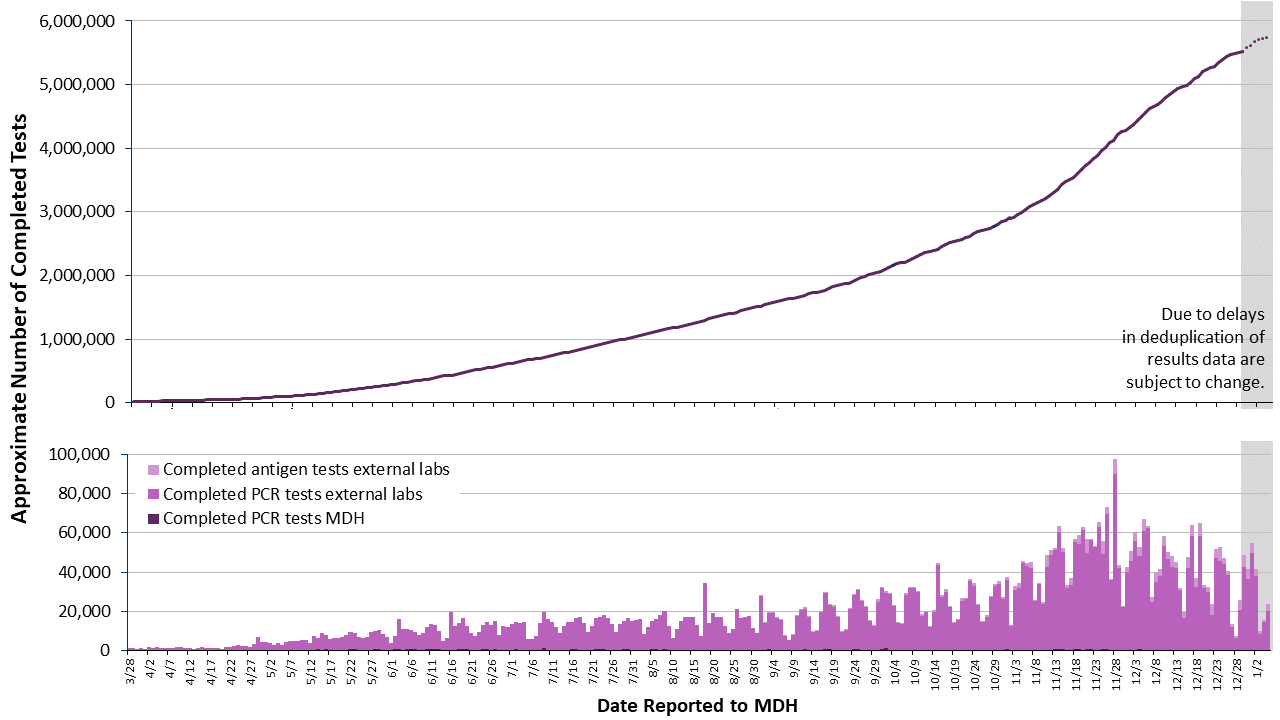
The Minnesota Department of Health is reporting 1,935 new confirmed cases of COVID-19, 411 probable cases from antigen testing, and 67 deaths. The confirmed cases were found in 20,155 completed tests for a positive rate of 9.6 percent.
Marshall County had 4 confirmed positive cases and 2 deaths (a 65-69-year-old and an 80-84-year-old), Polk County-3 cases, Lake of the Woods-3 cases, Kittson County-1 case, Norman County-1 case, and Red Lake County-1 case. Roseau County had 1 death, a 75-79-year-old.
Updated January 6, 2021
Updated daily at 11 a.m., with data current as of 4 p.m. the previous day.
Data is for cases that were tested and returned positive. All data is preliminary and may change as cases are investigated. Many data points are collected during case interviews. Data presented below is for all cases, regardless of interview status. Data for cases pending interview may be listed as “unknown/missing.”
Positive PCR test results are considered confirmed cases. Positive antigen test results are considered probable cases.
All probable cases get the same public health follow up and recommendations as cases confirmed by PCR tests.
Daily Update:
Because all data is preliminary, the change in number of cumulative positive cases and deaths from one day to the next may not equal the newly reported cases or deaths.
Total positive cases (cumulative)
427,587
Total confirmed cases (PCR positive) (cumulative)
411,956
Total probable cases (Antigen positive) (cumulative)
Data in the data tables is current as of 11 a.m. daily. Dynamic images and maps will update shortly after 11 a.m. daily and will not work if your browser is in compatibility mode.
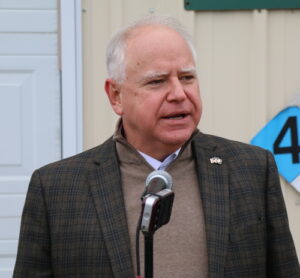
As the COVID-19 situation improves by nearly every metric across Minnesota, Governor Tim Walz today announced measures that loosen restrictions on important parts of daily life. The Governor also urged Minnesotans to protect the progress made over the past month.
“The situation in Minnesota is undeniably better than it was last month,” Governor Walz said. “We have reasons to be optimistic, and Minnesotans’ sacrifice and commitment to their communities helped change the pandemic’s trajectory and saved lives. But we need to protect the progress we’ve made.”
The announcement comes as tens of thousands of Minnesotans have received their first dose of the vaccine, COVID-19 cases are down, hospital bed use is declining, and kids are heading back to the classroom.
“As we cautiously adjust the dials to help Minnesotans return to important elements of their daily lives, we continue to monitor where we stand,” Governor Walz continued. “Two months ago the pandemic quickly snowballed from manageable to out-of-control. For our students, our small businesses, and public health, we cannot allow that to happen again.”
Today, COVID-19 is spreading more slowly across Minnesota than two months ago. Recognizing our progress – but understanding we need to remain cautious – the Governor is adjusting the dials and opening more activities and sectors of the economy. Starting January 11:
Indoor dining at bars and restaurants can open at 50 percent capacity, with a maximum of 150 people. Parties of no more than six people must remain six feet from other parties; bar seating is open to parties of two; reservations are required; and establishments must close dine-in service by 10 p.m.
Gym capacity remains capped at 25 percent but maximum capacity increases to 150 and classes can increase to 25 people, assuming distancing can be observed. Machines and people must maintain 9 feet of distance. Face coverings are required.
Outdoor events and entertainment continue at 25 percent capacity, but maximum capacity increases to 250 people. Social distancing is required.
Indoor events and entertainment – like bowling alleys, movie theaters, and museums – may open at 25 percent, with no more than 150 people in each area of the venue. Face coverings are required, and they may not offer food service after 10 p.m.
Youth and adult organized sports have resumed practice as of January 4 and games resume January 14 with spectators, following the appropriate capacity limits for indoor or outdoor venues. Inter-region tournaments and out of state play are discouraged.
Pools opened on January 4 for some activity and may now open, like gyms, at 25 percent capacity.
Wedding receptions and other private parties may resume with limits. If food and drink are served at the event, then they are limited to two households or 10 people indoors and 3 households or 15 people outdoors. If there is no food or drink, they are covered by event venue guidelines. Any related ceremony – like a wedding or funeral ceremony – is guided by rules for ceremonies and places of worship.
Places of worship remain open at 50% capacity but without an overall maximum capacity.
“We have a lot to be thankful for as the COVID-19 situation improves and many of our students head back to school,” said Lieutenant Governor Peggy Flanagan. “Because Minnesotans have made sacrifices to protect their neighbors, we are able to return to some of the activities we love. But COVID is still a threat, and we must remain cautious.”
“Today, we can be cautiously optimistic about the progress Minnesotans have made in slowing the spread of COVID-19,” said Department of Employment and Economic Development Commissioner Steve Grove. “I am thankful for the work and sacrifices the hospitality industry has made to keep their employees, neighbors and communities safe. These efforts pave the way for loosened guidelines, allowing more jobs and more business growth. To keep our economy moving, it’s critical that we all remain vigilant in fighting COVID-19 by masking up and staying safe.”
As some restrictions loosen, Minnesota faces challenges to protecting the recent progress made.
Some other states are seeing the virus surge.
Public health experts, including Dr. Fauci, are warning of the potential for a post-holiday wave of cases.
Concern remains about the emergence of a new, more contagious coronavirus variant spreading around the world.
As the weather gets colder and Minnesotans move indoors, gatherings occur more often in settings that allow the virus to spread more easily.
“Minnesotans have worked hard and done their part to get us back from the edge of the cliff, and now they can help keep things on the right track,” Minnesota Department of Health Commissioner Jan Malcolm said. “One year into this pandemic, we know that improvements are tenuous. If we let our guard down, COVID-19 finds a way to surge back in terrifying ways. That means it’s still very important to wear a mask and stay 6 feet from others when you are out in the community. As we look for vaccines to become more widely available for all of us, these basic protections can serve as a bridge to better days ahead.”
Minnesotans should continue to take precautions to combat the spread of the virus in their community – wear a mask, practice social distancing, and stay outside when possible. Minnesotans should also get tested if appropriate and download the COVIDawareMN smartphone app to get notified if they’ve been exposed to someone who tests positive.
Last month Governor Walz announced that every elementary school may return to in-person learning, recognizing that kids being in school is an important public health priority. The state has learned more about how to reduce the potential for spread in schools from success in other settings, and with additional mitigation strategies, giving the youngest learners the chance to be in person helps our kids get the high-quality education they need and helps bring relief to many families. Elementary schools may begin in-person learning on January 18.
Also last month, Governor Walz also signed into law $216 million in direct support for small businesses and workers affected by the pandemic, which has provided targeted aid to keep small businesses afloat, extended unemployment benefits for workers struggling to get by, and helped families put food on the table.
Executive Order 21-01 will have the full force and effect of law upon the approval of the Executive Council, which is made up of Governor Walz, Lt. Governor Flanagan, Attorney General Keith Ellison, Secretary of State Steve Simon, and State Auditor Julie Blaha.
More information on these restrictions and the state response is available here.
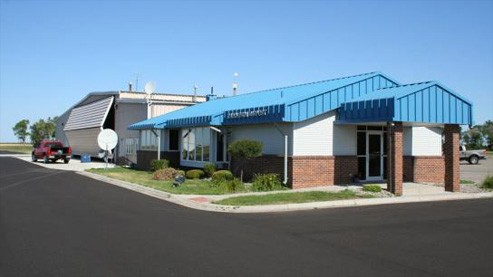
The Crookston Airport Commission will meet Thursday, January 7 at 8 a.m. in the Council Chambers at City Hall. The meeting will be a video conference covering a discussion on the runways in the Master Plan.
Elaine M. (Snustad) Kolle, 90, beloved wife and mother, Fargo, ND, formerly of Hendrum and Halstad, MN, was called to her eternal resting place on Saturday, January 2, 2021, at Sanford Hospital in Fargo.
In lieu of flowers, memorials are preferred to Immanuel Lutheran Church or Immanuel Lutheran Cemetery, 321 Main Street East, Hendrum, MN.
Funeral: 2:00 PM, Friday, January 8, 2021, at Immanuel Lutheran Church, Hendrum, MN, following all of Minnesota and CDC COVID-19 social distancing guidelines. All must wear a mask to attend.
Visitation: One hour before the funeral at the church.
Interment: Immanuel Lutheran Cemetery, Hendrum, MN
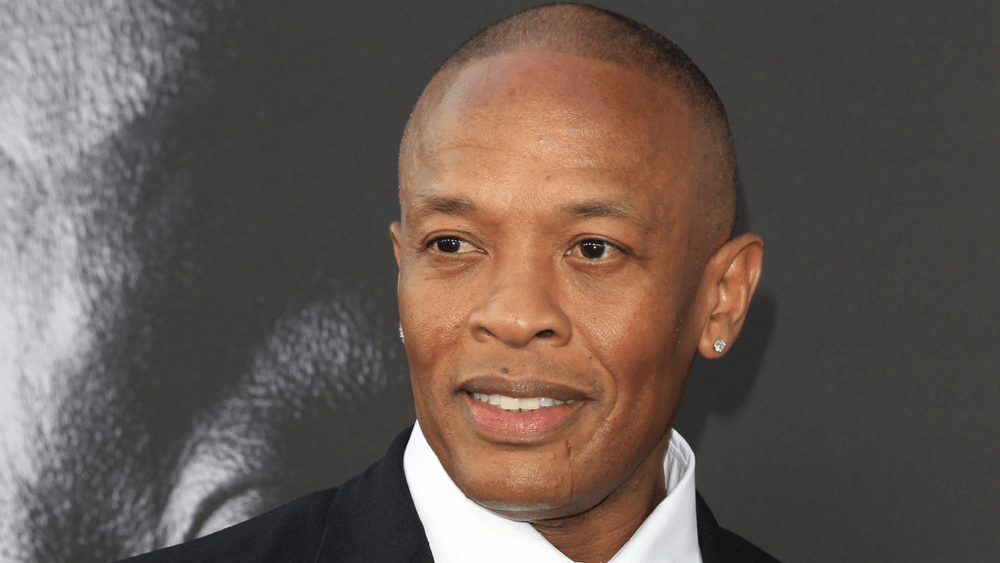
Dr. Dre is in the intensive care unit after suffering a brain aneurysm. The rapper, 55, is hospitalized at Los Angeles’ Cedars-Sinai Medical Center,. TMZ reported Tuesday that the musician was taken to the hospital by ambulance on Monday after suffering the aneurysm. Dre (born Andre Romelle Young) is in a stable and undergoing tests, the outlet reports.
Dr. Dre’s medical emergency comes about six months after his estranged wife, Nicole Young filed for divorce in June after 24 years of marriage. The former couple tied the knot in May 1996 and share two children together: son Truice, 23, and 19-year-old daughter Truly.
Dr. Dre rose to fame as part of the iconic rap group N.W.A., leaving in 1991 to become a solo artist and then becoming one of hip hop’s greatest producers. Dre later joined forces with record company executive Jimmy Iovine in 2006 to launch audio products company Beats by Dr. Dre. In 2014, Apple purchased the brand for $3 billion.
Dr. Dre took to Instagram to provide an update on his condition and said he’s “doing great and getting excellent care from my medical team.” He continued, “I will be out of the hospital and back home soon. Shout out to all the great medical professionals at Cedars. One Love!!”
* * *
Dr. Dre is in the intensive care unit after suffering a brain aneurysm. The rapper, 55, is hospitalized at Los Angeles’ Cedars-Sinai Medical Center,. TMZ reported Tuesday that the musician was taken to the hospital by ambulance on Monday after suffering the aneurysm. Dre (born Andre Romelle Young) is in a stable and undergoing tests, the outlet reports.
Dr. Dre’s medical emergency comes about six months after his estranged wife, Nicole Young filed for divorce in June after 24 years of marriage. The former couple tied the knot in May 1996 and share two children together: son Truice, 23, and 19-year-old daughter Truly.
Dr. Dre rose to fame as part of the iconic rap group N.W.A., leaving in 1991 to become a solo artist and then becoming one of hip hop’s greatest producers. Dre later joined forces with record company executive Jimmy Iovine in 2006 to launch audio products company Beats by Dr. Dre. In 2014, Apple purchased the brand for $3 billion.
Georgia’s two Senate runoff elections were held on Tuesday, and Democrats are a step closer to take control of the U.S. Senate as Raphael Warnock became the projected winner over Republican Sen. Kelly Loeffler. Democrat Jon Ossoff is also currently in the lead against Republican Sen. David Perdue, though the race is still too close to call.
As of 2 a.m. ET Wednesday, the Associated Press projected Warnock the winner over Atlanta pastor Loeffler. Warnock made history with his election win, becoming the first Black Democrat elected as a U.S. senator from a state in the South and only the 11th Black senator in the history of the nation. He becomes the first Democrat to win a U.S. Senate race in Georgia in 20 years.
Ossoff surged ahead of Perdue by more than 8,500 votes after trailing much of the night due to votes counted from Democrat-heavy DeKalb County. “When all the votes are counted we fully expect that Jon Ossoff will have won this election to represent Georgia in the United States Senate,” Ossoff campaign manager Ellen Foster said in a statement. The Perdue campaign said the race is “an exceptionally close election that will require time and transparency to be certain the results are fair and accurate and the voices of Georgians are heard…We believe in the end, Senator Perdue will be victorious.”
Warnock’s victory gives Democrats 49 seats in the Senate, one shy of creating a 50-50 tie with Republicans, which would effectively give Democrats control because Vice President-elect Kamala Harris would be the tie-breaking vote. A win for Ossoff would give Democrats their coveted 50th seat. A possible Senate sweep in Georgia would give Democrats control of the Senate for the first time since 2004.