The final item on the regular agenda for Monday’s City Council meeting was a resolution regarding the authorization to make repairs to the Crookston Community Swimming Pool. The city received a quote from Lunseth Plumbing and Heating in the amount of $17,852.18 to make repairs to the heat exchanger at the pool. With the budget for pool maintenance for 2025 being set at $25,000 and there having been some maintenance required earlier this year, coming into Monday’s meeting, it was a real possibility that these repairs were not going to be able to happen.
With the cost of the heat exchanger,the city would be over budget by $6,660 for 2025. Carol Gregg of Fin & Fit, however, spoke at Monday’s meeting announcing that the group will be donating $10,000 to help cover the cost of the Heat Exchanger. “That heat exchanger is almost $18,000. Fin and Fit is really stepping up and putting $10,000 towards it which is an amazing amount,” says Scott Butt of Parks & Rec. “In talking to Carol Gregg, she’s got some ideas about what we can do, maybe down the road, for the tile and everything.”
Yes, as explained the heat exchanger isn’t the only item needing fixing at the pool but, it is the only one needed right now to get the pool back up and running.“The council made the decision to fix the heat exchanger. We also brought forward that there are some issues with tile and with lighting,” says Butt. “To spend everything now, really puts us in a bad situation if we were to have anything else break. So, I think the council really took the idea. Let’s get the heat exchanger up and running, and let’s really put together a comprehensive plan of what we need to do next budget year.”
Butt spoke to the council about the other projects that need to be completed at the pool. There have been some tiles coming off the pool below the water line, as well as some underwaterlights that have gone out. Both of these items would need the pool water levels to be lowered to fix them. That in and of itself costs money, as the pool would need to be refilled, and the chemicals would need to be balanced. “I’m not a big fan of deferred maintenance but, in some cases you have to and then make sure we take care of it as soon as we have the funds to do it again,” says Butt. “We’ve only had the pool for five years, and it’s one of those deals where everybody who has a pool has nightmare stories. We are where we’re at, and nobody knew the heat exchanger was going to go out because it’s wrapped in a big heat blanket and you can’t see it every day.”
In a perfect world, this is not how the city wishes things would be, of course. “Is the way we are doing it a perfect scenario, no,” says Butt. “Is it the best for the City of Crookston right now? I think the council believes it’s the best for the City of Crookston right now, and my job is to take what they tell me to do and go do it, and that’s what we are going to do.”
Although it was decided to defer some maintenance items till the next budget year Butt says he knows the pool holds importance to the community and as soon as they can get to those items they will. “Yes, six to seven months can be a long time, but it can also go pretty quickly.We will defer it for a little bit, but the plan is to keep it on the stove and make sure we get the stuff fixed.”
With Fin & Fit’s generous donation to the city for the heat exchanger,the city will havearound $3400 left in this year’s budget for pool maintenance.
The Crookston City Council met on Monday, April 21, at 5:30 p.m. in the Council Chambers at City Hall.
As part of the consent agenda, the council was asked to approve ABDO to provide the classification and compensation study for the city. “They are going to be drafting complete, current job descriptions in compliance with the full Minnesota Statutes for every position we have in the city,” says City Administrator Jeff Shoobridge. “They will also do compensation studies to ensure that our pay ranges and pay scales accurately reflect what the job does. The state of Minnesota has a classification guide, but it doesn’t necessarily match every position that a city has, and it’s based on a point system.” Shoobridge says that ABDO will look at all the jobs that are done in the city, identify what point values they are, so that even if you have a dissimilar job, but the responsibilities and authorities are similar, the pay scales will then be similar, even if those jobs are nothing alike.
Also on the consent agenda, the council was asked to declare a police vehicle as surplus property. Chief Darin Selzler says the vehicle came to the department as a DUI forfeiture. “We’ve had a Chevy Pickup, as the resolutions said, a 2007 Chevy Pickup. We’ve had that for several years and obtained it from a DUI forfeiture,” says Selzler. “Over the last year, now that we have been able to get squad cars again, it was determined that it’s an excess vehicle in our fleet. So, we declared that as surplus property so we could move forward to sell that, dispose of it, whatever we need to do.”
The council was also asked, as part of the consent agenda on Monday, to approve Clifton Larson Allen, LLP (CLA) to provide assistance to the 2024 audit preparations.“This is really a housekeeping item. They did the same work for us last year,” says Shoobridge. “They assemble the various documents in a format that is easy for the auditors to use to provide us with our audit. It makes the auditor’s job easier; instead of the auditor’s staff having to take the time to find every bit of information, they are assembling it in an auditor-friendly format.”
There was one public hearing Monday evening regarding the Unmanned Aerial System (UAS) or drone program. “We did receive several comments via email. I believe four, and they are attached in the packet,” says Chief Selzler. “And then again, per Minnesota statute, similar to body camera wearing programs, part of the statute was to have a public forum at a regularly scheduled council meeting for public comment, which we did tonight. We didn’t receive any additional comments, so kind of a check box on that statutory requirement tonight.”Chief Selzler and Fire Chief Shane Heldstab have been working together to get the drone program underway as a tool to help enhance public safety.
The regular agenda included the approval of City Hall’s Summer hours of Monday through Thursday from 7:00 a.m. to 4:30 p.m. and Fridays from 7:00 a.m. to 11:00 a.m. from Memorial Day to Labor Day. The council unanimously approved the summer hours for the summer of 2025.
The council introduced an ordinance entitled “Regulations of Cannabis Business” in the City of Crookston, and also discussed the Cannabis ordinance during Ways and Means. “The city is going to be required to have at least one license once they get the rules and start issuing licenses,” says Shoobridge. “We need to make sure we have our ordinances in place to regulate that when the state is ready to issue licenses. If we don’t have an ordinance, someone can set up anywhere they want to.” Shoobridge says the city wants to be able to regulate things and also have things make sense as far as where they are zoned. “Just like bars, liquor stores are only allowed in certain zoning districts, that really kind of where we are going with that,” says Shoobridge. “Obviously, there will be buffer zones; schools, parks, places where children congregate. So, we’re in the very beginning stages, this is just an introduction, so I’m sure it will be amended to some extent as we move forward.” During Ways and Means, Council Member Klatt also mentioned that he would like to see what a Municipal Cannabis Business model would look like should the city choose to go that route in the future. “There is the opportunity for a municipal cannabis store,” says Shoobridge. “They want to look at what the potential for that might be, to be able to alleviate some stress on the taxpayers. I will be contacting a couple of consultants to identify the pros and cons of a municipal store versus the state override on the taxes for the retail cannabis.”
The next City Council meeting will be at 5:30 p.m. on Monday, May 5.
The Crookston Pirate Softball team hosts the West Marshall Fusion (Warren-Alvarado-Oslo and Stephen-Argyle) and the Fertile-Beltrami Falcons in a split doubleheader at KROX Radio Stadium in Crookston. The first game at 2:30 and the Fertile-Beltrami game is scheduled for a 4:30 p.m. start. Both games can be heard on KROX Radio.
Crookston vs West Marshall
FIRST INNING- After the first West Marshall batter sruck out, Chandler Stroble walked and the next batter lined out to center field. Stroble advanced to second on a wild pitch and moved to third on another wild pitch. The next batter grounded out. The first two Crookston batters were retired before Madi Bruggeman reached on an error. The next batter hit the ball off the edge of the bat and theball was right in front of home plate and the Pirate hit the ball with her foot and was out for the third out of the inning.
SECOND INNING- The first West Marshall batter grounded out before Hanna Stroble walked. After a pop out, Josie Johnston reached on a bloop single and runners were at first and second base. The runners advanced on a passed ball before a Fusion strikeout ended the threat. Crookston’s Peyton Demarais and Brea Lessard drew walks with one out. After a strike out, Leah Johanneck was hit by a pitch to load the bases. The next batter grounded out and the inning was over.
THIRD INNING – West Marshall’s Jocie Groven led off the inning with a walk and advanced to second base on a ground out for the second out of the inning. The next batter flew out to centerfield and the half inning was over. Crookston’s Rilynn Aubol led off the bottom of the inning with a walk. The next three batters were retired and the game was still scoreless after three innings.
FOURTH INNING- West Marshall loaded the bases to start the inning with a walk to Macey Boe, a Hanna Stroble singled, and Rachel Wimpfheimer hit by pitch. A run scored on a passed ball and another run scored on a Josie Johnston single for a 2-0 lead. Crookston’s Demarais walked to lead off the bottom of the inning before the next three batters struck out.
FIFTH INNING- West Marshall’s first two batters were retired before they got a big two-out rally going. Olivia Winge singled, stole second base and moved to third on a passed ball. Macy Boe and Hanna Stroble walked to load the bases. Wimpfheimer was hit by pitch to score a run. Josie Johnston walked to score a run and Haley Olson walked to score the third run of the inning for a 5-0 lead. Crookston’s Emily Bowman started the bottom of the inning with a walk. The next two batters were retired before Kambelle Freije single for the first Pirate hit of the game. Leia Parkin hit a fly ball to center field and the ball was dropped and that allowed Bowman to score from second base and Crookston traield 5-1.
SIXTH INNING- West Marshall’s Chandler Stroble and Taylor Wentz were hit by a pitch before the next three batters were retired. The first two Crookston batters were retired before Brylee Darco blasted a fly ball over the center fielder’s head for a double. Emily Bowman reached on an error and Darco scored on a fielder’s choice to get the Pirates within a 5-2 deficit.
Wesley Curtis Knutson, age 76, of Crookston, Minnesota, passed away on Thursday, April 17, 2025. He was born to loving parents Orville and Evelyn (Heideman) Knutson on May 1, 1948, in Fosston, Minnesota.
He was raised in McIntosh, Minnesota, graduating from McIntosh High School in 1966. He then went on to attend Northland Junior College in Thief River Falls, and then Moorhead State College in 1968. He graduated in 1970 with his bachelor’s degree in history and social studies and went back to get his degree in elementary education in 1971. Wes met the love of his life, Linda Diane Frethem, in 1970 at the Winger town hall dance. Four years later Wesley and Linda were married on June 14, 1974, at Hope Lutheran Church. They were blessed with three children, Derek, Sarah, and Aaron, who Wes loved and cherished very much. Wesley moved to Crookston in 1971 and began his teaching career. Education was a passion of Wesley’s, being a teacher for 35 years, he was awarded Teacher of the Year in 2005. He was also involved in the Minnesota State High School League, Minnesota Softball Association, and the Minnesota Education Association.
His faith in God was very important to him. Wesley was a member of Salem Lutheran Church in McIntosh, and later Trinity Lutheran Church in Crookston.
Wes was a man with many interests. He loved traveling with his wife, Linda, fishing, golfing, reading historical novels and biographies, and was very involved with sports and athletics. Playing slow pitch softball for 44 years, he was also an umpire in baseball for 12 years, volleyball for 34 years, football for 48 years, and softball and basketball for 52 years. He was a beloved coach for the high school volleyball team for 8 years, and coached track for 34 years. He was awarded for his hard work and passion and was inducted into the Minnesota Basketball Coaches Association Hall of Fame in 2017, the Minnesota Softball Hall of Fame in 2023, and was awarded the Minnesota State High School League Distinguished Service Award in 2023. He will be fondly remembered by his kind, professional, helpful spirit.
Wesley is lovingly survived by his wife, Linda (Frethem) Knutson; children, Derek (Emily) Knutson of Chattanooga, TN, Sarah (Bret) Danielson of Sioux Falls, SD, and Aaron (Anna Petry) Knutson of West Fargo, ND; grandchildren, Drew Knutson, Cora Knutson, James Knutson, Thomas Knutson, Caleb Danielson, Carly Danielson, Caley Danielson; sister, Mary (Dan) Solie of Minneapolis, MN; stepbrothers, John Wertish and Jim Wertish; stepsister Judy Bemis; and brother-in-law, Kenny Amundson, of McIntosh, MN. He is preceded in death by his grandparents, parents, Orville Knutson and Evelyn (Knutson) Wertish, stepdad, Jerry Wertish, and siblings, Diane Amundson and Orville Knutson.
A prayer service will be held on Thursday, April 24, at 8:00 p.m., with a visitation starting at 6:00 p.m. A funeral service to celebrate Wesley’s life will be held on Friday, April 25, at 11:00 a.m. at Trinity Lutheran Church in Crookston, Minnesota, with visitation one-hour prior. There will be a luncheon at Trinity Lutheran Church following a private family interment service at Oakdale Cemetery after the funeral service.
Tri-Valley Opportunity Council, Inc. Senior Programs held its annual Foster Grandparent recognition luncheon at the Crookston Inn & Convention Center in Crookston on Friday, April 11. Marley Melbye (Senior Programs Director) began the event by welcoming the Foster Grandparents and guests. Jason Carlson (CEO) thanked all of the volunteers for the difference they make in the lives of children and families in our communities.
Shane Mendez was the guest speaker. He shared stories of his life and the choices he made in his life that have led him to where he is today in a presentation entitled, “A Tale of a Tadpole”. He encouraged the Foster Grandparent volunteers to “Don’t Give Up on Me”, when working with struggling and marginalized children. His stories and presentation hit home with many of the volunteers.
“Making a Difference” awards were then given to individuals who were nominated by professional staff at their volunteer site. “An old man walked along a shore littered with thousands of starfish, beached and dying after a storm. A young man was picking them up and flinging them back into the ocean. ‘Why do you bother?’ the old man scoffed. ‘You’re not saving enough to make a difference. ’ The young man picked up another starfish and sent it spinning back to the water. ‘Made a difference to that one,’ he said. You make a difference, every day,” is engraved on the award along with the recipient’s name.
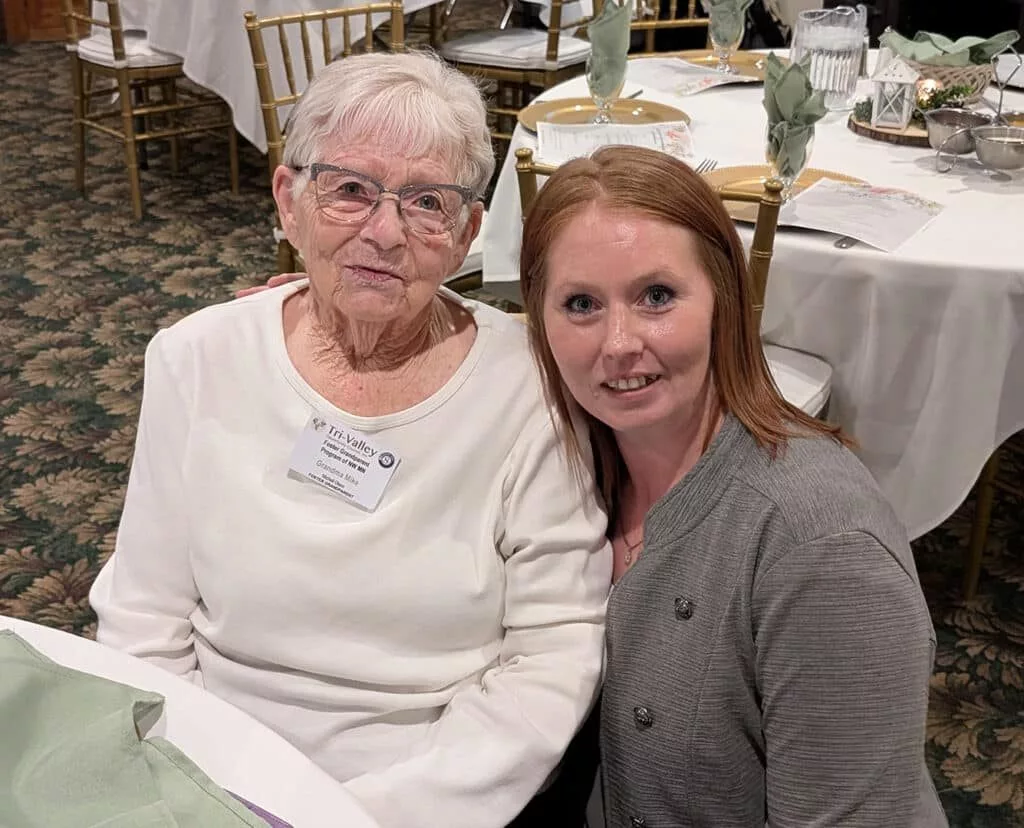
Recipients of the World of Difference Award were; Grandma Mike Olson (Fertile-Beltrami). Another recipient was selected who couldn’t make the recognition. They will be recognized at the school where they volunteer during National Volunteer Week (April 20-26). Following recognition, volunteers and staff enjoyed a meal from Scobey’s Pub & Grub and time to mingle and share wonderful stories and volunteering experiences.
For more information on how to become a Foster Grandparent, Caring Companion or how to receive Caring Companion services, please call Marley, Alicia, Jean, Kristal, or Lynn at 800-584-7020.
Tri-Valley Opportunity Council, Inc. is a non-profit community action agency headquartered in Crookston, Minnesota. Since 1965, Tri-Valley has provided services in 74 counties in Minnesota and Eastern North Dakota. The mission of Tri-Valley is to provide opportunities to improve the quality of life for people and communities.
Grandma Mike Olson and Alicia Berhow (Senior Programs Manager)
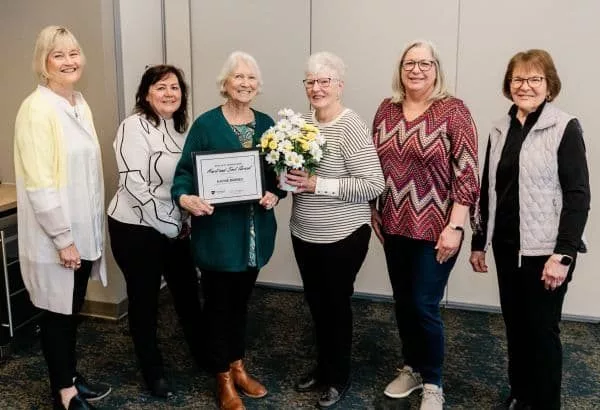
RiverView Health’s Auxiliary consists of over 300 members, many of whom dedicate their time and talents to raise funds for projects aimed at enhancing the patient experience at RiverView Health. Being recognized as the top volunteer from such a large group is special, but so is Kathie Barnes. Barnes was recently named the 2024 Alta Hermodson Heart and Soul Award recipient, also known as the Auxiliary’s Volunteer of the Year Award.
The annual award, created in 2003, is given to a volunteer(s) who exemplifies the Auxiliary’s mission of volunteerism and service to RiverView Health, just as Alta Hermodson did. Hermodson was involved in her church, library, hospital, and museum. She truly gave of herself and volunteered at places in which she believed.
Those nominating Barnes stated she was the first person they thought of when nomination time rolled around.
“Kathie is an awesome volunteer and is always willing to lend a helping hand in the gift shop and with fundraising activities,” the nomination stated. “Kathie is a dedicated volunteer who always is willing to help whenever needed, and it is always done with a smile and positive attitude.
“We are proud to nominate Kathie for the Alta Hermodson Award. She deserves this award and would make Alta very proud to see such a dedicated individual receiving this award in her name.”
Not only is Kathie a dedicated volunteer in the Limited Addition Gift Shop, but over the years, she has also served as treasurer, vice president, and president of the Auxiliary Board.
“She is a great example of what the Alta Hermodson Heart & Soul Award stands for,” concluded the nomination.
Left to right: Auxiliary Board members Judie Kanten, Deb Sylvester, Volunteer of the Year Kathie Barnes, Gloria Watro, Jean LaPlante, and Marlys Mjoen.
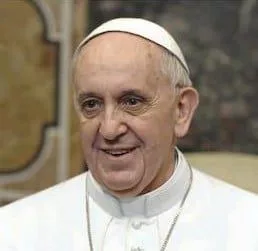
Pope Francis, history’s first Latin American pontiff who charmed the world with his humble style and concern for the poor but alienated conservatives with critiques of capitalism and climate change, died Monday. He was 88.
Bells tolled in church towers across Rome after the announcement, which was read out by Cardinal Kevin Farrell from the chapel of the Domus Santa Marta, where Francis lived. “At 7:35 this morning, the Bishop of Rome, Francis, returned to the home of the Father. His entire life was dedicated to the service of the Lord and of his Church,” said Farrell, the Vatican camerlengo, who takes charge after a pontiff’s death. Francis, who suffered from chronic lung disease and had part of one lung removed as a young man, was admitted to Gemelli hospital on Feb. 14, 2025, for a respiratory crisis that developed into double pneumonia. He spent 38 days there, the longest hospitalization of his 12-year papacy. He made his last public appearance on Easter Sunday — a day before his death — to bless thousands of people in St. Peter’s Square, drawing wild cheers and applause. Beforehand, he met briefly with U.S. Vice President JD Vance. Francis performed the blessing from the same loggia where he was introduced to the world on March 13, 2013 as the 266th pope. From his first greeting that night — a remarkably normal “Buonasera” (“Good evening”) — to his embrace of refugees and the downtrodden, Francis signaled a very different tone for the papacy, stressing humility over hubris for a Catholic Church beset by scandal and accusations of indifference.
After that rainy night, the Argentine-born Jorge Mario Bergoglio brought a breath of fresh air into a 2,000-year-old institution that had seen its influence wane during the troubled tenure of Pope Benedict XVI, whose surprise resignation led to Francis’ election.
But Francis soon invited troubles of his own, and conservatives grew increasingly upset with his progressive bent, outreach to LGBTQ+ Catholics and crackdown on traditionalists. His greatest test came in 2018 when he botched a notorious case of clergy sexual abuse in Chile, and the scandal that festered under his predecessors erupted anew on his watch.
And then Francis, the crowd-loving, globe-trotting pope of the peripheries, navigated the unprecedented reality of leading a universal religion through the coronavirus pandemic from a locked-down Vatican City.
He implored the world to use COVID-19 as an opportunity to rethink the economic and political framework that he said had turned rich against poor.
“We have realized that we are on the same boat, all of us fragile and disoriented,” Francis told an empty St. Peter’s Square in March 2020. But he also stressed the pandemic showed the need for “all of us to row together, each of us in need of comforting the other.”
Flags flew at half-staff Monday in overwhelmingly Roman Catholic Italy, and tourists and the faithful gathered in St. Peter’s Square, where bells tolled in mourning.
Johann Xavier, who traveled from Australia, hoped to see the pope during his visit. “But then we heard about it when we came in here. It pretty much devastated all of us,’’ he said.
Francis’ death sets off a weekslong process of allowing the faithful to pay their final respects, first for Vatican officials in the Santa Marta chapel and then in St. Peter’s for the general public, followed by a funeral and a conclave to elect a new pope.
Reforming the Vatican
Francis was elected on a mandate to reform the Vatican bureaucracy and finances but went further in shaking up the church without changing its core doctrine. “Who am I to judge?” he replied when asked about a purportedly gay priest.
The comment sent a message of welcome to the LGBTQ+ community and those who felt shunned by a church that had stressed sexual propriety over unconditional love. “Being homosexual is not a crime,” he told The Associated Press in 2023, urging an end to civil laws that criminalize it.
Stressing mercy, Francis changed the church’s position on the death penalty, calling it inadmissible in all circumstances. He also declared the possession of nuclear weapons, not just their use, was “immoral.”
In other firsts, he approved an agreement with China over bishop nominations that had vexed the Vatican for decades, met the Russian patriarch and charted new relations with the Muslim world by visiting the Arabian Peninsula and Iraq.
He reaffirmed the all-male, celibate priesthood and upheld the church’s opposition to abortion, equating it to “hiring a hit man to solve a problem.”
Roles for women
But he added women to important decision-making roles and allowed them to serve as lectors and acolytes in parishes. He let women vote alongside bishops in periodic Vatican meetings, following long-standing complaints that women do much of the church’s work but are barred from power.
Sister Nathalie Becquart, whom Francis named to one of the highest Vatican jobs, said his legacy was a vision of a church where men and women existed in a relationship of reciprocity and respect.
“It was about shifting a pattern of domination — from human being to the creation, from men to women — to a pattern of cooperation,” said Becquart, the first woman to hold a voting position in a Vatican synod.
Still, a note of criticism came from the Women’s Ordination Conference, which had been frustrated by Francis’ unwillingness to push for the ordination of women.
“His repeated ‘closed door’ policy on women’s ordination was painfully incongruous with his otherwise pastoral nature, and for many, a betrayal of the synodal, listening church he championed. This made him a complicated, frustrating, and sometimes heart-breaking figure for many women,” the statement said.
The church as refuge
While Francis did not allow women to be ordained, the voting reform was part of a revolutionary change in emphasizing what the church should be: a refuge for everyone — “todos, todos, todos” (“everyone, everyone, everyone”). Migrants, the poor, prisoners and outcasts were invited to his table far more than presidents or powerful CEOs.
“For Pope Francis, (the goal) was always to extend the arms of the church to embrace all people, not to exclude anyone,” said Farrell, the camerlengo.
Francis demanded his bishops apply mercy and charity to their flocks, pressed the world to protect God’s creation from climate disaster, and challenged countries to welcome those fleeing war, poverty and oppression.
After visiting Mexico in 2016, Francis said of then-U.S. presidential candidate Donald Trump that anyone building a wall to keep migrants out “is not Christian.”
While progressives were thrilled with Francis’ radical focus on Jesus’ message of mercy and inclusion, it troubled conservatives who feared he watered down Catholic teaching and threatened the very Christian identity of the West. Some even called him a heretic.
A few cardinals openly challenged him. Francis usually responded with his typical answer to conflict: silence.
He made it easier for married Catholics to get an annulment, allowed priests to absolve women who had had abortions and decreed that priests could bless same-sex couples. He opened debate on issues like homosexuality and divorce, giving pastors wiggle room to discern how to accompany their flocks, rather than handing them strict rules to apply.
St. Francis of Assisi as a model
Francis lived in the Vatican hotel instead of the Apostolic Palace, wore his old orthotic shoes and not the red loafers of the papacy, and rode in compact cars. It wasn’t a gimmick.
“I see clearly that the thing the church needs most today is the ability to heal wounds and to warm the hearts of the faithful,” he told a Jesuit journal in 2013. “I see the church as a field hospital after battle.”
If becoming the first Latin American and first Jesuit pope wasn’t enough, Francis was also the first to name himself after St. Francis of Assisi, the 13th century friar known for personal simplicity and care for nature and society’s outcasts.
Francis went to society’s fringes to minister with mercy: caressing the deformed head of a man in St. Peter’s Square, kissing the tattoo of a Holocaust survivor, or inviting Argentina’s garbage scavengers to join him onstage in Rio de Janeiro. He formally apologized to Indigenous peoples for the crimes of the church from colonial times onward.
“We have always been marginalized, but Pope Francis always helped us,” said Coqui Vargas, a transgender woman whose Roman community forged a unique relationship with Francis during the pandemic.
His first trip as pope was to the island of Lampedusa, then the epicenter of Europe’s migration crisis. He consistently chose to visit poor countries where Christians were often persecuted minorities, rather than the centers of global Catholicism.
Friend and fellow Argentine, Bishop Marcelo Sánchez Sorondo, said his concern for the poor and disenfranchised was based on the Beatitudes — the eight blessings Jesus delivered in the Sermon on the Mount for the meek, the merciful, the poor in spirit and others.
“Why are the Beatitudes the program of this pontificate? Because they were the basis of Jesus Christ’s own program,” Sánchez said.
Missteps on sexual abuse scandal
But more than a year passed before Francis met with survivors of priestly sexual abuse, and victims’ groups initially questioned whether he really understood the scope of the problem.
Francis did create a sex abuse commission to advise the church on best practices, but it lost influence after a few years and its recommendation of a tribunal to judge bishops who covered up for predator priests went nowhere.
And then came the greatest crisis of his papacy, when he discredited Chilean abuse victims in 2018 and stood by a controversial bishop linked to their abuser. Realizing his error, Francis invited the victims to the Vatican for a personal mea culpa and summoned the leadership of the Chilean church to resign en masse.
As that crisis concluded, a new one erupted over ex-Cardinal Theodore McCarrick, the retired archbishop of Washington and a counselor to three popes.
Francis had actually moved swiftly to sideline McCarrick amid an accusation he had molested a teenage altar boy in the 1970s. But Francis nevertheless was accused by the Vatican’s one-time U.S. ambassador of having rehabilitated McCarrick early in his papacy.
Francis eventually defrocked McCarrick after a Vatican investigation determined he sexually abused adults as well as minors. He changed church law to remove the pontifical secret surrounding abuse cases and enacted procedures to investigate bishops who abused or covered for their pedophile priests, seeking to end impunity for the hierarchy.
“He sincerely wanted to do something and he transmitted that,” said Juan Carlos Cruz, a Chilean abuse survivor Francis discredited who later developed a close friendship with the pontiff.
A change from Benedict
The road to Francis’ 2013 election was paved by Pope Benedict XVI’s decision to resign and retire — the first in 600 years.
Francis didn’t shy from Benedict’s potentially uncomfortable shadow. Francis embraced him as an elder statesman and adviser, coaxing him out of his cloistered retirement to participate in the public life of the church until Benedict’s death on Dec. 31, 2022.
“It’s like having your grandfather in the house, a wise grandfather,” Francis said.
Francis’ looser liturgical style and pastoral priorities made clear he and the German-born theologian came from very different religious traditions, and Francis directly overturned several decisions of his predecessor.
He made sure Salvadoran Archbishop Óscar Romero, a hero to the liberation theology movement in Latin America, was canonized after his case languished under Benedict over concerns about the credo’s Marxist bent.
Francis reimposed restrictions on celebrating the old Latin Mass that Benedict had relaxed, arguing the spread of the Tridentine Rite was divisive. The move riled Francis’ traditionalist critics and opened sustained conflict between right-wing Catholics, particularly in the U.S., and the Argentine pope.
Conservatives oppose Francis
By then, conservatives had already turned away from Francis, betrayed after he opened debate on allowing remarried Catholics to receive the sacraments if they didn’t get an annulment — a church ruling that their first marriage was invalid.
“We don’t like this pope,” headlined Italy’s conservative daily Il Foglio a few months into the papacy, reflecting the unease of the small but vocal traditionalist Catholic movement.
Those same critics amplified their complaints after Francis’ approved church blessings for same-sex couples, and a controversial accord with China over nominating bishops.
Its details were never released, but conservative critics bashed it as a sellout to communist China, while the Vatican defended it as the best deal it could get with Beijing.
U.S. Cardinal Raymond Burke, a figurehead in the anti-Francis opposition, said the church had become “like a ship without a rudder.”
Burke waged his opposition campaign for years, starting when Francis fired him as the Vatican’s supreme court justice and culminating with his vocal opposition to Francis’ 2023 synod on the church’s future.
Twice, he joined other conservative cardinals in formally asking Francis to explain himself on doctrine issues reflecting a more progressive bent, including on the possibility of same-sex blessings and his outreach to divorced and civilly remarried Catholics.
Francis eventually sanctioned Burke financially, accusing him of sowing “disunity.”
Francis insisted his bishops and cardinals imbue themselves with the “odor of their flock” and minister to the faithful, voicing displeasure when they didn’t.
His 2014 Christmas address to the Vatican Curia was one of the greatest public papal reprimands ever: Standing in the marbled Apostolic Palace, Francis ticked off 15 ailments that he said can afflict his closest collaborators, including “spiritual Alzheimer’s,” lusting for power and the “terrorism of gossip.”
Trying to eliminate corruption, Francis oversaw the reform of the scandal-marred Vatican bank and sought to wrestle Vatican bureaucrats into financial line, limiting their compensation and ability to receive gifts or award public contracts.
He authorized Vatican police to raid his own secretariat of state and the Vatican’s financial watchdog agency amid suspicions about a 350 million euro investment in a London real estate venture. After a 2 1/2-year trial, the Vatican tribunal convicted a once-powerful cardinal, Angelo Becciu, of embezzlement and returned mixed verdicts to nine others, acquitting one.
The trial, though, proved to be a reputational boomerang for the Holy See, showing deficiencies in the Vatican’s legal system, unseemly turf battles among monsignors, and how the pope had intervened on behalf of prosecutors.
While earning praise for trying to turn the Vatican’s finances around, Francis angered U.S. conservatives for his frequent excoriation of the global financial market.
Economic justice was an important themes of his papacy, and he didn’t hide it in his first meeting with journalists when he said he wanted a “poor church that is for the poor.”
In his first major teaching document, “The Joy of the Gospel,” Francis denounced trickle-down economic theories as unproven and naive, based on a mentality “where the powerful feed upon the powerless” with no regard for ethics, the environment or even God.
“Money must serve, not rule!” he said in urging political reforms.
Some U.S. conservatives branded Francis a Marxist. He jabbed back by saying he had many friends who were Marxists.
Soccer, opera and prayer
Born Dec. 17, 1936, in Buenos Aires, Jorge Mario Bergoglio was the eldest of five children of Italian immigrants.
He credited his devout grandmother Rosa with teaching him how to pray. Weekends were spent listening to opera on the radio, going to Mass and attending matches of the family’s beloved San Lorenzo soccer club. As pope, his love of soccer brought him a huge collection of jerseys from visitors.
He said he received his religious calling at 17 while going to confession, recounting in a 2010 biography that, “I don’t know what it was, but it changed my life. … I realized that they were waiting for me.”
He entered the diocesan seminary but switched to the Jesuit order in 1958, attracted to its missionary tradition and militancy.
Around this time, he suffered from pneumonia, which led to the removal of the upper part of his right lung. His frail health prevented him from becoming a missionary, and his less-than-robust lung capacity was perhaps responsible for his whisper of a voice and reluctance to sing at Mass.
On Dec. 13, 1969, he was ordained a priest, and immediately began teaching. In 1973, he was named head of the Jesuits in Argentina, an appointment he later acknowledged was “crazy” given he was only 36. “My authoritarian and quick manner of making decisions led me to have serious problems and to be accused of being ultraconservative,” he admitted in his Civilta Cattolica interview.
Life under Argentina’s dictatorship
His six-year tenure as the head of the order in Argentina coincided with the country’s murderous 1976-83 dictatorship, when the military launched a campaign against left-wing guerrillas and other regime opponents.
Bergoglio didn’t publicly confront the junta and was accused of effectively allowing two slum priests to be kidnapped and tortured by not publicly endorsing their work.
He refused for decades to counter that version of events. Only in a 2010 authorized biography did he finally recount the behind-the-scenes lengths he used to save them, persuading the family priest of feared dictator Jorge Videla to call in sick so he could celebrate Mass instead. Once in the junta leader’s home, Bergoglio privately appealed for mercy. Both priests were eventually released, among the few to have survived prison.
As pope, accounts began to emerge of the many people — priests, seminarians and political dissidents —whom Bergoglio actually saved during the “dirty war,” letting them stay incognito at the seminary or helping them escape the country.
Bergoglio went to Germany in 1986 to research a never-finished thesis. Returning to Argentina, he was stationed in Cordoba during a period he described as a time of “great interior crisis.” Out of favor with more progressive Jesuit leaders, he was eventually rescued from obscurity in 1992 by St. John Paul II, who named him an auxiliary bishop of Buenos Aires. He became archbishop six years later, and was made a cardinal in 2001.
He came close to becoming pope in 2005 when Benedict was elected, gaining the second-most votes in several rounds of balloting before bowing out.
Pope Francis has died at 88, the Vatican has confirmed. The Vatican said Francis died just after 7:30 a.m. local time on Monday, a day after he appeared outside the Vatican on Easter Sunday to greet well-wishers. His death on Monday comes after a series of worsening health problems, including a respiratory crisis that left him in critical condition in recent months.
Cardinal Kevin Farrell, Camerlengo of the Apostolic Chamber, formally announced Francis’ death on Monday, with a statement saying: “At 7:35 this morning, the Bishop of Rome, Francis, returned to the house of the Father. His entire life was dedicated to the service of the Lord and of His Church. He taught us to live the values of the Gospel with fidelity, courage, and universal love, especially in favor of the poorest and most marginalized. With immense gratitude for his example as a true disciple of the Lord Jesus, we commend the soul of Pope Francis to the infinite merciful love of the One and Triune God.”
Francis’ body will be put on display in an open coffin in St. Peter’s Basilica in the Vatican, one of Christianity’s holiest sites, where pontiffs have been buried for more than 100 years. But in accordance with Francis’ wishes, he is expected to be buried at the ancient Basilica of St. Mary Major, which lies outside the Vatican walls. His successor will be chosen during a conclave, a gathering of cardinals who are charged with electing a new pope in strict seclusion at the Vatican.
**
On Easter Sunday, Pope Francis made an appearance in St. Peter’s Square at the Vatican to offer his traditional blessing, following a short earlier meeting with U.S. Vice President JD Vance, who is Catholic (per ABC NEWS).
According to a statement from the Holy See Press Office, Vice President Vance arrived at Casa Santa Marta—Pope Francis’ residence—shortly after 11:30 a.m. local time. A photo shared by the Vatican shows the pontiff greeting Vance and his accompanying delegation during their brief audience on April 20, 2025. The Vatican noted the meeting lasted only a few minutes and served primarily as a chance to exchange Easter greetings.
In the days leading up to Easter, the Vatican had not confirmed whether the 88-year-old Francis would be able to attend the Mass, saying it would depend on his health (he skipped the solemn services of Good Friday and Holy Saturday leading up to Easter). The pontiff did not lead the Easter Mass, with Cardinal Angelo Comastri, a retired archpriest of St. Peter’s Basilica, taking his place and delivering the homily that Francis has prepared.
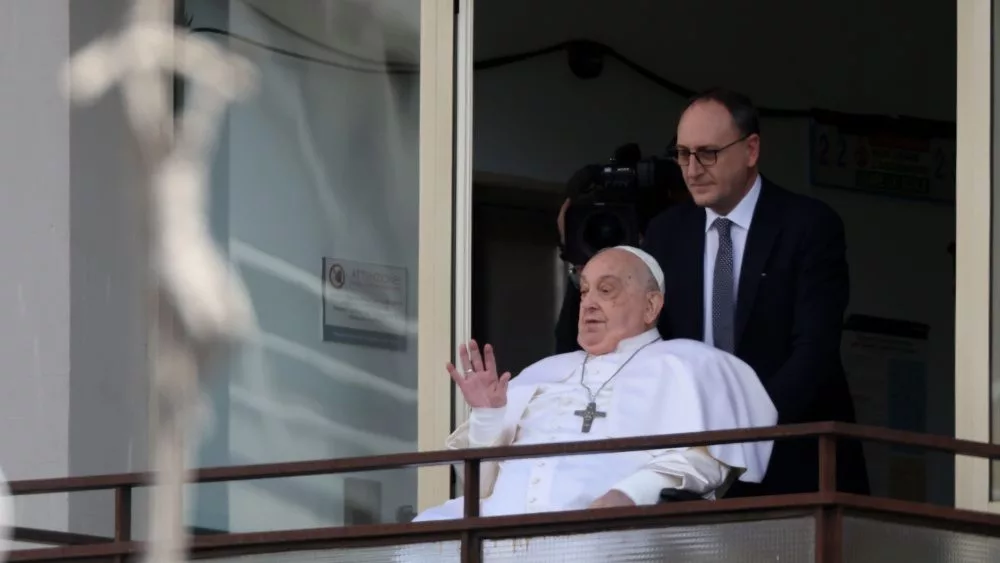
In what would be his last public appearance, Francis emerged on the central balcony of St. Peter’s Basilica on Easter Sunday, overlooking a large crowd that had just attended Easter mass. From his wheelchair, the Pope said “Dear brothers and sisters, Buona Pasqua,” (which means “Happy Easter” in Italian) and extended his blessing and greeted the crowd. His Easter message carried a heartfelt plea for peace, especially in conflict zones across the Middle East, Europe, and Africa: “Let the spirit of humanity be the guiding force in all our actions. In the face of the brutal impact of wars that harm innocent civilians and target vital institutions like schools and hospitals, we must remember that we are striking not objects, but human beings—each one with a soul and dignity.”
Editorial credit: Marco Iacobucci Epp / Shutterstock.com
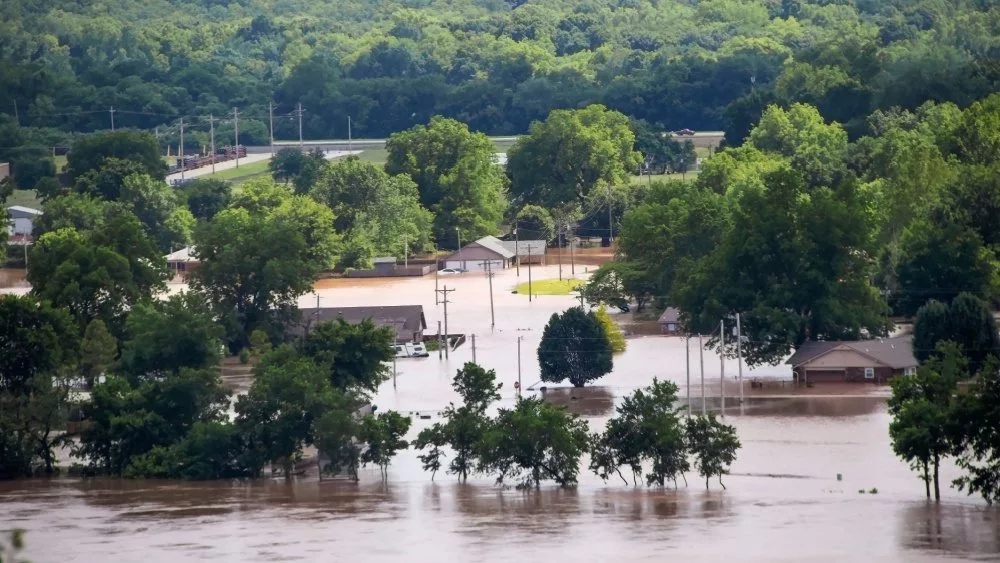
Severe weather impacted over 45 million Americans on Easter Sunday as thunderstorms, flooding, and tornado risks affected areas from East Texas to southeastern Iowa and Illinois. In Oklahoma, heavy rain earlier in the weekend had already caused fatalities.
At least two people, one of them a child, lost their lives after powerful storms swept through parts of Texas and Oklahoma over the weekend. According to police, a woman and a 12-year-old boy were killed after floodwaters swept their vehicle off the road in central Oklahoma (per CNN).
The Moore Police Department in Oklahoma reported that emergency teams responded around 9 p.m. Saturday to calls about two vehicles stranded in rising floodwaters. Authorities said one vehicle veered off the road and was pulled under a bridge by the strong current. While rescuers managed to save most of the passengers, two individuals could not be saved. The storm event severely affected roadways and prompting dozens of high-water rescues throughout Moore.
The police department shared on Facebook“This was a historic weather event. With heavy hearts, we confirm the deaths of an adult woman and a 12-year-old boy, whose bodies were later recovered. We deeply appreciate the assistance from neighboring agencies who supported the rescue operations. Our thoughts and prayers are with the families and loved ones of those lost.”
The National Oceanic and Atmospheric Administration’s (NOAA) Storm Prediction Center received over 120 reports of severe weather on Saturday, most of them concentrated in Texas and Oklahoma. The town of Jacksboro, Texas, faced significant damage, with photos revealing battered buildings and scattered debris. In Oklahoma’s Courtney area, storm damage included downed trees and power lines, while structures such as barns and sheds also suffered destruction.
According to the Storm Prediction Center, severe weather was expected to strike parts of East Texas through the Ozarks and mid-Mississippi Valley in the afternoon and evening, threatening portions of Arkansas and Missouri. Severe weather, including strong winds, hail, and tornado risks, also spread to East Texas, the Ozarks, and parts of Arkansas and Missouri. Tornado watches were issued across multiple states, including Oklahoma and Texas, with boat rescues in Montague County, Texas, where flooding stranded residents. Forecasters expect the storms to subside by Monday.
Criminal Minds: Evolution has been renewed for Season 19, with the announcement coming ahead of the show’s 18th season premiere, debut on Paramount+ May 8 with new episodes dropping weekly thereafter.
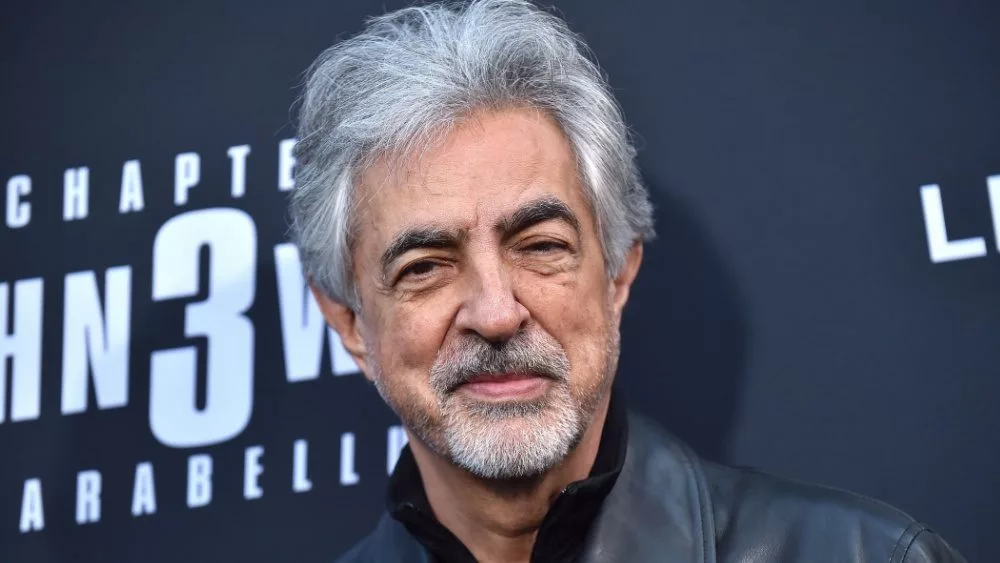
“Evolution” picks up after the events of the original “Criminal Minds,” which aired on CBS for 15 seasons (2005-2020), and reunited many of the original series’ cast — including Joe Mantegna, A.J. Cook, Kirsten Vangsness, and Aisha Tyler, with Adam Rodriguez and Paget Brewster. RJ Hatanaka and Zach Gilford joining the series when it was revived in 2022.
Gilford portrays Elias Voit — also known as Sicarius Killer — with the upcoming season showing the aftermath of an attack against him. An official synopsis states that the incident prompted “his restless followers on the dark web to begin wreaking havoc all over the country. In order to stop this nefarious group from killing more innocents, the BAU is forced to work alongside an increasingly unpredictable Voit who has his own agenda.”
Editorial credit: DFree / Shutterstock.com
Are you still listening?
3628718266
Mozilla/5.0 AppleWebKit/537.36 (KHTML, like Gecko; compatible; ClaudeBot/1.0; +claudebot@anthropic.com)